
Prefer to read? The full note, with linked sources, is below.
A confident answer to a tax question can be right for one set of facts and wrong for the next. These four cases each turn on a single fact. They make good tests for any AI you use, as long as you check its reasoning against the official source.
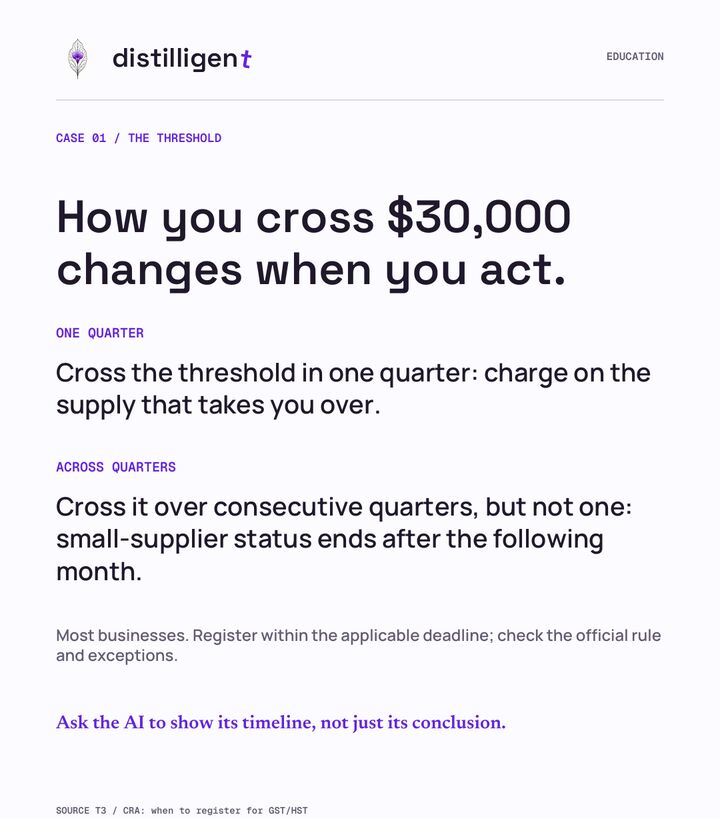
Case 1 · The threshold
How you cross $30,000 changes when you have to act.
This applies to most businesses. Register within the deadline that applies to you, and check the official rule and its exceptions.
Ask the AI to show its timeline, not just its conclusion. (Source T3)
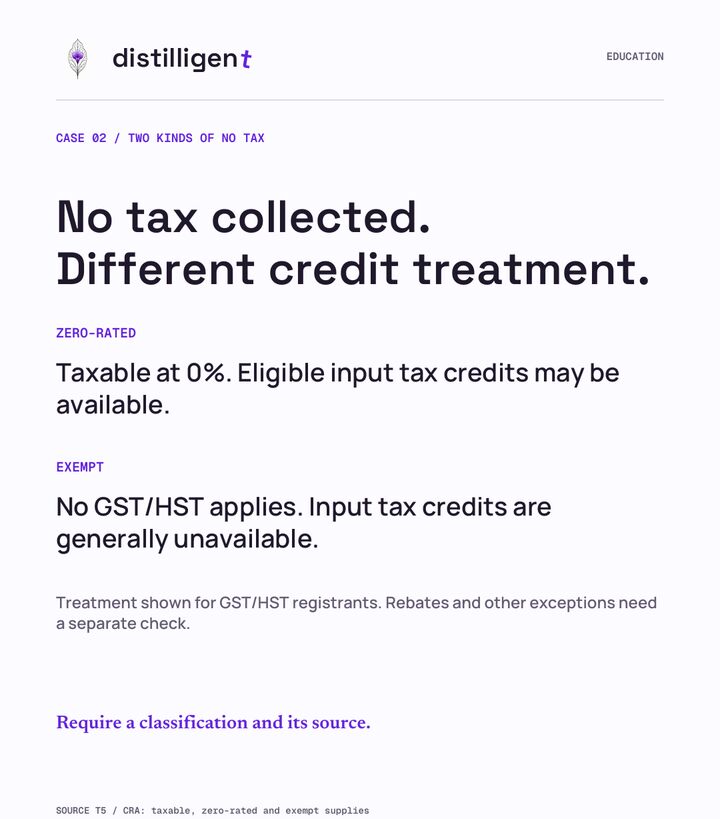
Case 2 · Two kinds of no tax
No tax collected. Different credit treatment.
This is the treatment for GST/HST registrants. Rebates and other exceptions need a separate check.
Require a classification and its source. (Source T5)
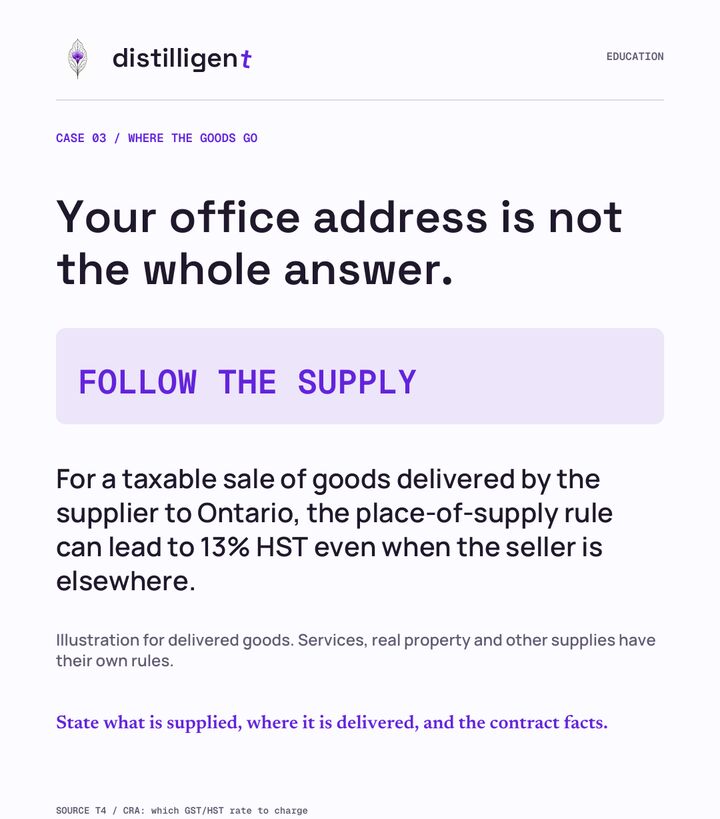
Case 3 · Where the goods go
Your office address is not the whole answer.
Follow the supply. For a taxable sale of goods that the supplier delivers to Ontario, the place-of-supply rules can lead to 13% HST even when the seller is somewhere else. This illustration is for delivered goods; services, real property and other supplies have their own rules.
State what is supplied, where it is delivered, and the contract facts. (Source T4)
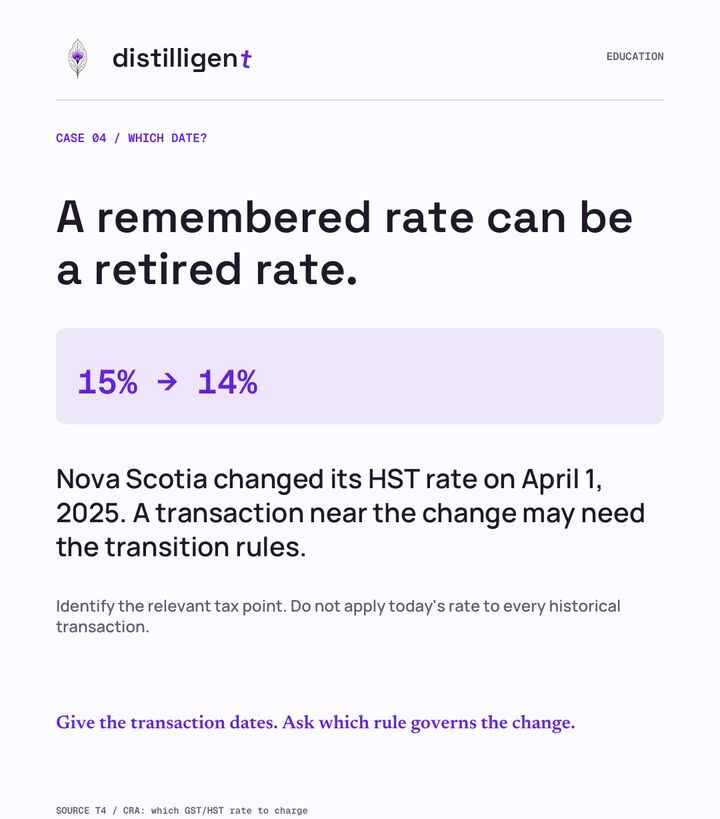
Case 4 · Which date?
A remembered rate can be a retired rate.
Identify the relevant tax point. Don’t apply today’s rate to every historical transaction.
Give the transaction dates, and ask which rule governs the change. (Source T4)
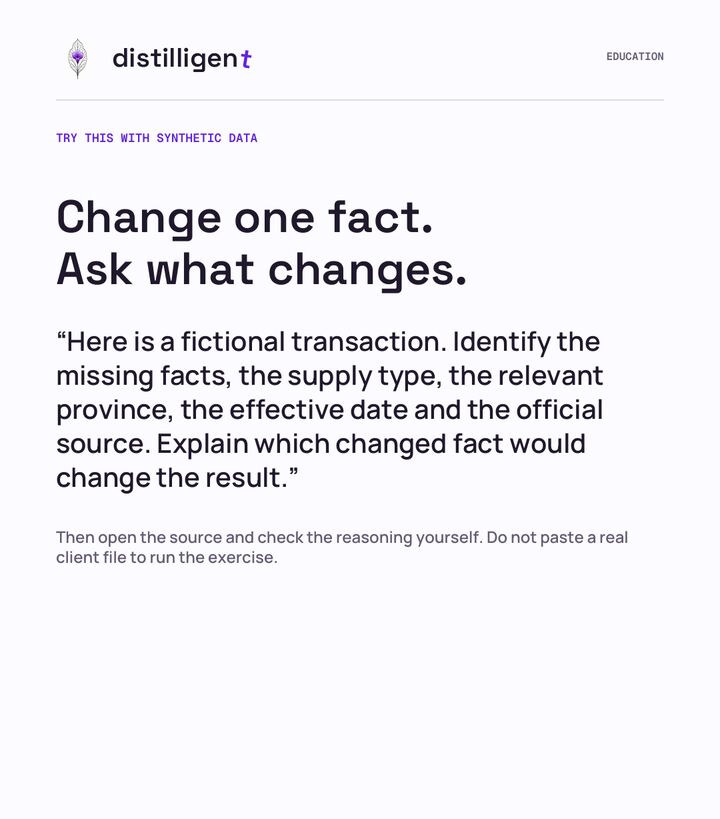
Try this with synthetic data
Change one fact. Ask what changes.
“Here is a fictional transaction. Identify the missing facts, the type of supply, the relevant province, the effective date and the official source. Then explain which changed fact would change the result.”
Then open the source and check the reasoning yourself. Don’t paste a real client file to run the exercise.
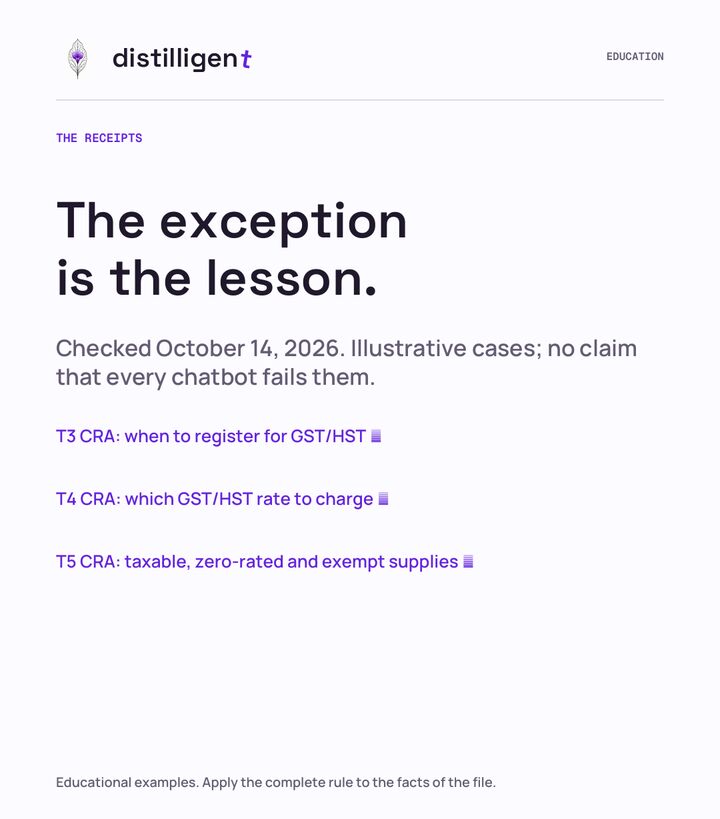
The exception is the lesson.
Sources
Checked October 14, 2026, and re-checked October 15, 2026. These are illustrative cases, not a claim that every chatbot fails them. Apply the complete rule to the facts of each file.
Bring the difficult question. Learn to check the answer.
Practical AI training for Canadian accounting professionals. Explore professional training