01
Revenue recovery
Find where the power goes.
A change in a meter signature. A load that no longer adds up. Bring those patterns into view so your team can investigate tampering and unexplained losses.
A clearer place to investigate.
 distilligentLet’s talk
For public sectors · GridMind
GridMind is energy-grid intelligence: bringing losses, equipment health and changing demand into one connected picture.
Start with the part of your network that matters most.
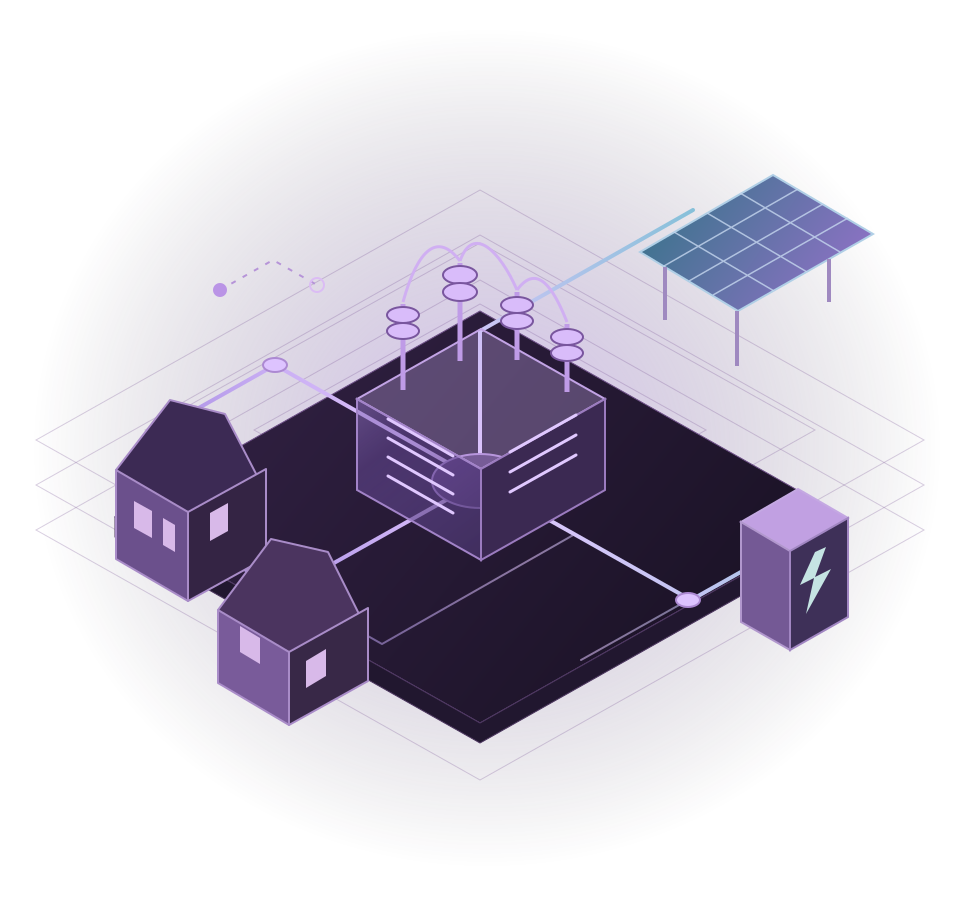
Generation · Equipment · Demand
GridMind concept illustrationEnergy grid intelligence
Your network has its own patterns. Start with the question your operators need answered, and the signals that can help them answer it.
Revenue recovery
A change in a meter signature. A load that no longer adds up. Bring those patterns into view so your team can investigate tampering and unexplained losses.
A clearer place to investigate.
Predictive maintenance
Temperature, vibration and current tell different parts of the same story. Read them together over time to surface equipment that needs attention.
A better-informed maintenance decision.
Solar & battery coordination
Solar output rises. Demand moves. Batteries create options. Connect those changing conditions to plan how generation, storage and demand work together.
A fuller picture of the balance.
The absence is a signal
A sensor goes quiet. An expected report never comes. GridMind’s approach puts that absence in context: what normally happens here, what changed, and where to look next.
What should have reported in?
What does the silence change?
Defense & critical infrastructure
The same need extends beyond the grid: understand the normal pattern, notice drift, and give the people responsible the context to respond.
The signal.
The silence.
The situation around it.
For teams responsible for industrial control systems and essential infrastructure, an evaluation starts with your operating environment, data boundaries and review requirements.
Discuss your infrastructureA useful first step
Define the evaluation around a real operational decision. Agree on the data, the boundaries and what a useful result looks like.
Where are losses emerging? Which equipment needs attention? How is demand changing?
Identify the relevant data, its history and the access needed to use it.
Set the success measures and how your team will review the findings.
GridMind · By Distilligent
Bring your network’s hardest question. Let’s give it a starting point.
Talk about your networkOpens an email to sales@distilligent.ai with a few questions ready. Nothing is sent automatically.